New Alphabet Foxconn Venture Builds Intelligent Robots
🕓 Estimated Reading Time: 5 minutes
Overview
In a landmark development poised to reshape global manufacturing and beyond, tech giant Alphabet and electronics manufacturing behemoth Foxconn have officially announced a groundbreaking Alphabet Foxconn joint venture. The new entity, revealed on November 20, 2025, according to Fortune.com, is dedicated to developing and deploying a new generation of AI robots. This strategic alliance aims to combine Alphabet’s deep expertise in artificial intelligence and machine learning with Foxconn’s unparalleled scale in manufacturing and supply chain management, forging a path toward significantly more autonomous and adaptive industrial systems. The venture is set to innovate across various sectors, from optimizing complex production lines to enhancing logistics and even contributing to advanced healthcare solutions through sophisticated intelligent robotics.

Background & Context
The roots of this ambitious partnership lie in a shared vision for the future of automation. Alphabet’s contribution to the venture is spearheaded by Intrinsic, a company incubated within Alphabet’s X development lab, focused on advanced software and AI for industrial robots. Intrinsic’s mission has been to make robots easier to program, more adaptable to new tasks, and capable of learning from their environment—a significant leap from traditional, rigidly programmed industrial machines. This focus on advanced Intrinsic robotics brings a powerful layer of cognitive capability to the hardware. On the other side, Foxconn, officially Hon Hai Precision Industry Co., Ltd., is the world's largest contract electronics manufacturer, responsible for producing devices for numerous global brands. Its vast operational scale, intricate supply chains, and extensive experience in automation have made it a critical player in global industry.
The collaboration addresses a growing global demand for increased efficiency, resilience, and adaptability in manufacturing and logistics. Supply chain disruptions, labor shortages, and the push for higher-quality, customized products have accelerated the need for sophisticated automation solutions. The synergy between Alphabet’s AI software and Foxconn’s hardware integration and manufacturing prowess promises to accelerate the deployment of advanced robotic systems. Experts believe this partnership could redefine the landscape of industrial automation, moving beyond mere repetitive tasks to embrace complex decision-making and real-time adaptation. The goal is not just to replace human labor but to augment it, creating smarter factories and more efficient operational workflows.
Implications & Analysis
The implications of this Alphabet Foxconn joint venture are far-reaching. For manufacturing, the promise is a significant boost in productivity, flexibility, and precision. Future factories equipped with these advanced AI robots could dynamically reconfigure production lines, handle intricate assembly tasks requiring fine motor skills, and even perform quality control with unprecedented accuracy. In logistics, intelligent autonomous robots could revolutionize warehousing, inventory management, and last-mile delivery, drastically reducing operational costs and delivery times. Furthermore, the healthcare sector stands to benefit from robotic assistants capable of performing delicate surgical procedures, automating laboratory tasks, and providing personalized care in hospital settings, all with enhanced precision and consistency.
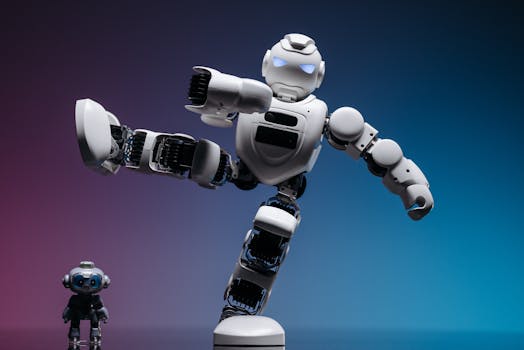
Analysts predict that the fusion of Alphabet's AI capabilities, particularly from its Intrinsic division, with Foxconn's manufacturing scale will lead to the rapid development and commercialization of highly sophisticated robotic systems. These intelligent robotics are expected to move beyond current limitations, exhibiting capabilities such as advanced perception, dexterous manipulation, and complex decision-making in unstructured environments. This could pave the way for fully autonomous production facilities and supply chains, driving down costs and increasing resilience against future disruptions. The partnership's success hinges on seamlessly integrating cutting-edge software with robust, scalable hardware, a challenge both companies are uniquely positioned to address.
Reactions & Statements
The announcement has generated significant buzz across the technology and industrial sectors. Sundar Pichai, CEO of Alphabet, reportedly emphasized the transformative potential, stating, 'This collaboration with Foxconn represents a pivotal moment in our commitment to advancing AI and applying it to solve real-world challenges. By combining Intrinsic's cutting-edge AI software for robots with Foxconn's manufacturing excellence, we are setting the stage for a new era of automation that will benefit industries globally and enhance human capabilities.' (Source: Fortune.com)
'This collaboration with Foxconn represents a pivotal moment in our commitment to advancing AI and applying it to solve real-world challenges. By combining Intrinsic's cutting-edge AI software for robots with Foxconn's manufacturing excellence, we are setting the stage for a new era of automation that will benefit industries globally and enhance human capabilities.'
Young Liu, Chairman and CEO of Foxconn, echoed this sentiment, highlighting the strategic advantage. 'Our partnership with Alphabet's Intrinsic division is a testament to our shared belief in the power of innovation to drive progress,' Liu stated. 'Integrating sophisticated AI into our production ecosystems will not only enhance our efficiency and product quality but also enable us to offer unparalleled manufacturing solutions to our clients worldwide. This is a significant step towards realizing our '3+3' strategy, focusing on next-generation technologies and electric vehicles.' (Source: Company statement, cited by Fortune.com)
Industry analysts have largely welcomed the news. 'This is a formidable pairing,' commented Dr. Emily Chang, a lead robotics analyst at TechNexus Research. 'Alphabet brings the brainpower, while Foxconn brings the brawn and the unparalleled ability to scale. This venture has the potential to accelerate the development and adoption of truly intelligent, adaptable robots far beyond what we've seen before, driving a new wave of industrial automation.'
What Comes Next
The Alphabet Foxconn joint venture is expected to establish R&D centers in both North America and Asia, leveraging diverse talent pools. Initial efforts will likely focus on refining the AI software for specific manufacturing applications within Foxconn's own facilities, serving as real-world testbeds before broader commercial deployment. The first wave of products is anticipated to target complex assembly operations and quality inspection tasks that currently require significant human dexterity and cognitive input.
Longer-term, the venture is poised to develop robotics solutions for a wider array of industries, including agriculture, energy, and even space exploration, where precision and autonomy are paramount. Challenges remain, particularly in ensuring the ethical development and deployment of advanced AI, addressing potential workforce displacement through reskilling programs, and navigating complex international regulatory landscapes. However, the combined resources and strategic vision of Alphabet and Foxconn suggest a robust capability to overcome these hurdles. The competitive landscape for intelligent robotics is heating up, with other tech giants and specialized robotics firms vying for market share, making this partnership a critical move to establish leadership in the burgeoning field.
Conclusion
The formation of the Alphabet Foxconn joint venture marks a significant milestone in the evolution of automation. By bringing together Alphabet’s cutting-edge AI and Intrinsic robotics expertise with Foxconn’s unparalleled manufacturing scale and operational know-how, the partnership is set to accelerate the development and adoption of truly intelligent and adaptable robotic systems. This collaboration promises to deliver transformative solutions across manufacturing, logistics, and healthcare, driving new efficiencies and capabilities across industries. As these advanced AI robots begin to integrate into global operations, they are expected to usher in a new era of industrial productivity and innovation, reshaping our interaction with technology in profound ways. The future of intelligent robotics is not just about replacing human effort but augmenting human potential, creating smarter, more resilient systems for a rapidly evolving world.


