Mastering Digital for Industrial Excellence
🕓 Estimated Reading Time: 5 minutes
Mastering Digital for Industrial Excellence
In an era defined by rapid technological advancement, industries worldwide are undergoing a profound transformation. The integration of digital technologies into core industrial processes is no longer a futuristic vision but a present-day imperative for businesses aiming to remain competitive and resilient. This comprehensive shift, often referred to as Industry 4.0, is fundamentally reshaping how goods are produced, managed, and delivered, paving the way for unprecedented levels of manufacturing excellence. From enhancing supply chain visibility to optimizing individual machine performance, the pursuit of digital solutions is driving a new paradigm of industrial operations, promising significant gains in productivity, efficiency, and sustainability.

Overview
The global industrial landscape is experiencing a significant pivot towards digital integration, driven by the need for greater agility, resilience, and adaptability. This movement, broadly characterized as the digital transformation industry, encompasses a spectrum of technologies, from the Internet of Things (IoT) and artificial intelligence (AI) to advanced robotics and cloud computing. The primary objective is to create interconnected, intelligent, and efficient systems that can respond dynamically to market demands and operational challenges. Businesses are increasingly recognizing that embracing these digital tools is not merely an option but a strategic necessity for achieving long-term growth and sustaining competitive advantage in a volatile global economy.
Background & Context
The roots of today's digital shift trace back to the advent of Industry 4.0, a term coined to describe the fourth industrial revolution. Unlike its predecessors, which focused on mechanization, mass production, and computerization, Industry 4.0 emphasizes intelligent, interconnected systems and real-time data exchange. Key enablers include cyber-physical systems, cloud computing, cognitive computing, and the industrial Internet of Things (IIoT). These technologies allow for predictive maintenance, remote monitoring, and autonomous processes, fundamentally changing the fabric of industrial operations. According to a recent report by PwC, 90% of industrial companies believe digital transformation is a priority, with over two-thirds already implementing a digital strategy. This widespread adoption underscores a collective understanding that legacy systems are simply not sufficient to meet the complexities and demands of modern manufacturing.
Historically, manufacturing processes often operated in silos, with limited data sharing between departments or even within different stages of production. The current wave of digital transformation seeks to dismantle these barriers, fostering an environment where data flows seamlessly, enabling holistic visibility and proactive decision-making. This shift is particularly crucial for industries facing pressures such as rising material costs, labor shortages, and increasing customer expectations for customized products and faster delivery times.
Implications & Analysis
The implications of mastering digital solutions for industrial operations are vast and transformative. One of the most significant benefits is a substantial improvement in operational efficiency. By leveraging data analytics, manufacturers can identify bottlenecks, optimize production schedules, and reduce waste. For instance, predictive maintenance, powered by AI and machine learning algorithms analyzing sensor data from machinery, can anticipate equipment failures before they occur, significantly cutting downtime and maintenance costs. This proactive approach ensures smoother operations and higher asset utilization.
Moreover, digital transformation is a cornerstone for achieving smart manufacturing. This involves integrating advanced information and communication technologies (ICT) into the manufacturing process, creating highly flexible and adaptable production systems. Features like digital twins—virtual replicas of physical assets—allow for real-time monitoring, simulation, and optimization without disrupting actual production. This capability fosters innovation, accelerates product development cycles, and ensures higher quality output. The result is a more responsive and resilient manufacturing ecosystem capable of adapting to changing market dynamics with unprecedented speed.
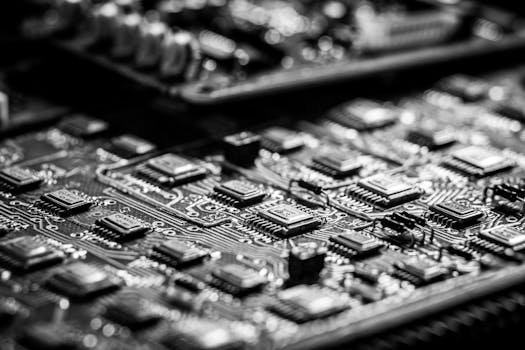
Another critical aspect is the advancement of industrial automation. Beyond traditional robotics, modern automation includes collaborative robots (cobots), autonomous guided vehicles (AGVs), and fully integrated production lines managed by sophisticated software. This not only enhances precision and speed but also redefines the role of human workers, shifting them towards tasks requiring critical thinking, problem-solving, and managing complex systems rather than repetitive manual labor. While initial investments can be substantial, the long-term returns in terms of increased productivity, improved safety, and higher product quality often outweigh the costs. Cybersecurity, however, remains a significant concern, necessitating robust protection for interconnected industrial systems against potential threats.
Reactions & Statements
Industry leaders and analysts consistently emphasize the urgency and potential of this digital shift. Many highlight that the challenge lies not just in adopting technology but in fundamentally re-evaluating business models and organizational cultures. 'The true power of digital transformation is unlocked when technology meets a culture of continuous improvement and innovation,' stated Dr. Alistair Rennie, a prominent industrial technology consultant, in a recent industry forum. 'It's about empowering people with data and tools to make smarter decisions, faster.'
'Companies that are hesitant to invest in digitalization risk being left behind in a rapidly evolving global market,' commented Maria Kova, CEO of a leading manufacturing conglomerate. 'The competitive landscape now demands agility, real-time insights, and the ability to personalize production at scale, all of which are enabled by digital solutions.'
The consensus among experts is that successful digital transformation requires a holistic strategy that addresses technology, processes, and people. Training and upskilling the workforce to manage and interact with new digital tools are crucial for ensuring smooth transitions and maximizing the benefits of these investments.
What Comes Next
Looking ahead, the trajectory for industrial excellence is intrinsically linked with advanced digitalization. The next phase will likely see further integration of cutting-edge technologies like quantum computing for complex optimization problems, expanded use of blockchain for supply chain transparency and security, and increasingly sophisticated AI for autonomous decision-making in production environments. Edge computing will become more prevalent, allowing data processing closer to the source, reducing latency and enhancing real-time responsiveness.
Sustainability will also become a driving force for digital innovation. Digital tools can help industries monitor and reduce energy consumption, optimize resource allocation, and minimize waste, contributing to a circular economy. Furthermore, the convergence of operational technology (OT) and information technology (IT) will continue to deepen, creating truly integrated enterprise-wide systems that offer unprecedented levels of control and insight. For instance, according to a report by Deloitte, companies leveraging IoT and AI for sustainability initiatives could see a 15-20% reduction in carbon footprint over the next five years.
Conclusion
The journey towards industrial excellence through digital transformation is a continuous evolution, not a destination. It demands strategic investment, a willingness to innovate, and a commitment to integrating technology across all facets of an organization. By embracing technologies that drive operational efficiency, foster smart manufacturing, and enhance industrial automation, businesses can unlock new levels of productivity, quality, and adaptability. The promise of the digital transformation industry is not merely about technological adoption, but about building resilient, future-ready enterprises capable of navigating the complexities of the 21st century and achieving true manufacturing excellence. Those who master this shift will undoubtedly lead the next wave of industrial prosperity.


